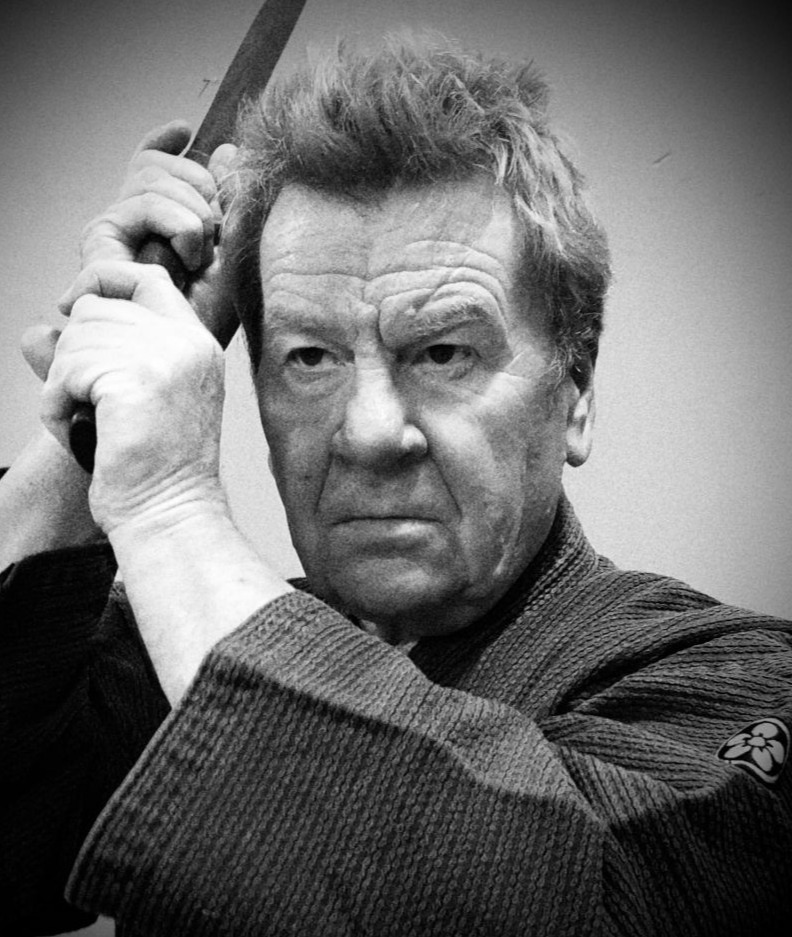
My martial arts journey started at 16 years old (1978) - I saw through the school gymnasium doors a Jūdō class being taught, my interest was immediately raised and decided I would join. The class was being led by a visiting instructor assisted by one of the school teachers.
After joining the school class I found out that the visiting instructor was from a local club Bushidōkan in Clifford (Nr Boston Spa). Following that, I joined Bushidōkan and my martial arts journey began in earnest.
They ran classes in multiple disciplines - 3 hour sessions, Tuesday was Jūdō, Aikidō and Atemi Jutsu, Thursday was Karate, Aikidō and Atemi Jutsu. This provided a more rounded skillset allowing arts to compliment each other.
Further down the line Saturday training was introduced so there was around 10 hours training a week. The dōjō was in an old school/church hall without heating or cooling so you certainly felt the change in seasons.
Bushidōkan expanded to the surrounding villages and had multiple clubs running concurrently. As such, I progressed in my journey and inevitably it led to teaching and I was able over the years to teach at various Bushidōkan dōjōs.
Most of my teaching gravitated towards Aikidō/Aiki-Jutsu.
The martial arts community is actually quite small and as an instructor you are sometimes fortunate to visit and train in other dōjōs in the area. You get to know most of the instructors and build a rapport with like minded souls.
One of those clubs was based in the centre of Leeds run by a famous local martial artist Frank Ryder. As visitors we trained there occasionally in Ju-Jitsu and Aikidō and got to know many of the members. One of those was a talented young martial artist called Mark Sykes who trained in multiple arts including Japanese sword. Myself and Colin Wood (another Bushidōkan instructor) had always had an interest in Japanese sword and following a chat with Mark were invited to a Budō Festival (multi disciplined) as guests. Included were sword demonstrations and we discovered that Mark was an instructor at a local Japanese Sword dōjō (Shiroi Bara). We requested to come along and possibly join. This will have been in the very late 1980’s early 1990’s. The club at that point was in Chapel Allerton having moved there from it’s origins in Armley. The two instructors were Mark Sykes and Steve Watering and the style was mainly BKA based Seitei Iaido with Koryū (old style) added. The story of how clubs moved from the BKA to Musashi UK and then Roshukai has been told elsewhere so I will not repeat it here.
At this point my other martial discipline began to tail off (getting a bit old for all that crashing and banging) so sword became the main source of training.
I think the main shift in our sword journeys happened in 1995 with the visit to the UK of Iwata Norikazu (Hachidan Hanshi) together with his supporting instructors. This is really when our sword journey for Musō Jikiden Eishin Ryū assumed a new direction and energy.
In addition to MJER, myself and Shiroi Bara are also a member of the UK Shibu for Hyōhō Niten Ichi Ryū (HNIR) school of Kenjutsu. Our HNIR journey began in the early 1990’s. Mark Sykes spent an extended period staying in Ohara (Okayama prefecture,Japan) and training with Matsuo Haruna Sensei together with MJER he also taught him HNIR. On his return he passed on that knowledge to Shiroi Bara students. Eguchi Soshin Sensei who travelled with Iwata Sensei on his 1995 visit was also a member of the same HNIR dōjō in Japan, the Hombu dōjō in Usa. We trained hard in the subject and in 1996 we were invited to visit the home and dojo of the HNIR 10th Soke in Usa (Ōita prefecture, Japan) - Imai Masayuki Sōke. During our visit we were granted permission to pass on the teachings and establish a European teaching base for HNIR. We had three teachers in Shiroi Bara who taught HNIR - myself, Mark Sykes Sensei and Colin Wood Sensei. Shiroi Bara has maintained it’s links with the Hombu dojo through Imai Sōke (10th headmaster), Iwami Toshio Sōke (11th) and Kajiya Takenori Sōke (12th and current)
HNIR and MJER despite being different schools do compliment each other and there are many similarities. Interestingly Iwata Sensei and Imai Sōke were good friends and had many discussions about the art of the sword.
I along with six other Eikoku Roshukai teachers were fortunate in August 2000 to be awarded teaching certificates and the title of Shihan (exemplary roll model) and tasked to pass on Iwata Sensei’s teachings to the group as Senior Instructors. Six of these instructors are still active members and teachers within Eikoku Roshukai.
I have had the opportunity and privilege to teach at many dōjōs, local and International Seminars and been invited to teach in other countries
So my martial arts journey of 48 years continues through passing on the teaching of MJER and HNIR in the best way possible ‘mouth to ear’ and significantly ‘heart to heart’. The journey doesn’t end and is a lifetime study. I have much to learn and at times still feel like a beginner, this is the pull that urges you to continue. Teaching is a privilege and also brings with it obligation, not only to the school but to my teachers and mentors that have been so generous to me over the years.
I have been very fortunate to have been taught by so many knowledgeable and generous instructors who are open and willing to share their passion for maintaining the legacy that is held with the Koryū styles. My teachers didn’t have secret teachings or things that were held back until you were worthy, they showed everything, it’s just that it revealed itself the more experience you gained and the more questions you asked. Iwata Sensei said you can judge a student’s level by the questions they ask, I hold with that philosophy and as he did, invite questions and more questions. It is not just the how, more importantly it is the why and why not that take your knowledge deeper.
Shiroi Bara is a healthy club, still practicing in the same dojo after 36 years, may it continue for many more, the instructors and the people will change but the Shiroi Bara family and spirit will continue.

Drag and Drop Website Builder